If this audio does not start automatically, click the Play button to listen to the article!
The story of how the recordings of my interview with Dani survived 14 years of technical mishaps (including my loss of a 1 TB external hard disk) is miraculous, but not as miraculous as the story of Wegdan el Barbary (AKA Dani).

With her death in 2018, the world of Arabian horses lost a legend and an authority on the Arabian horse in Egypt. Dani was an accomplished horse rider, an international supreme judge in show rings, and a world-renowned breeder of Arabian horses. She remains a shining beacon for women in the Middle East and the Muslim world for her accomplishments, and more importantly for her indisputable integrity and genuine care for the breed. Let us not forget that, despite all the lynching Tahawi horses to which Nasrallah and Sharkasi were subjected to, Dani stood her ground and defended the purity of their blood.
Dani might have had controversial opinions, including her disapproval of Arabian horses living outside their native desert. However, let us not forget that the same opinion was voiced by Abbas Pasha I, Viceroy of Egypt. He said: “Do not believe that the Arabian horses born in your countries are [authentic] Arabian horses. An Arabian horse cannot preserve all its features and its distinguishing attributes unless it breathes the air of the desert.”1
Wegdan Abboud (her maiden name) was born 31 October 1927 in Assyut, Upper Egypt to a Circassian mother and an Egyptian father. Her mother died at a very young age, so Dani’s grandmother shouldered the responsibility of raising Dani. Owning her own horses, the grandmother’s love for horses was passed down to the granddaughter, and as such horses became the companions of Dani since her early childhood. Later, the father decided to admit Dani to the boarding school of La Mère de Dieu to receive the same education and upbringing as her mother.
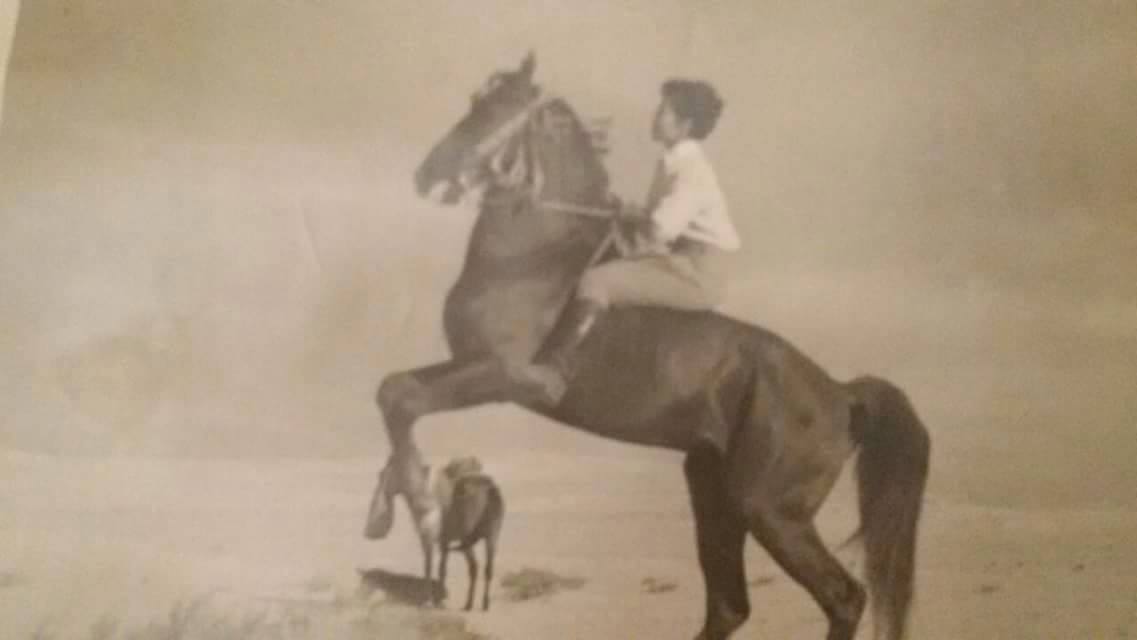
In the final year in school, Dani married Dr. El Barbary to be known later as Wegdan el Barbary. The vocational demands of a physician left Dani with free time on her hands. This was a perfect opportunity for Dani to reignite her passion for horses. She started searching for an instructor until she discovered a Russian instructor who owned a riding school in Dokki, Cairo. Dani said that the instructor was proud of her and believed that she was the best student he had ever had. The Russian instructor started teaching her vaulting before teaching her jumping because he believed that vaulting taught a rider how to maintain balance on the back of a horse. Dani said that the instructor was so proud of her and believed that she was the best student he had ever had. The Russian instructor started teaching her vaulting before teaching her jumping because he believed that vaulting teaches a rider how to maintain balance on the back of a horse.
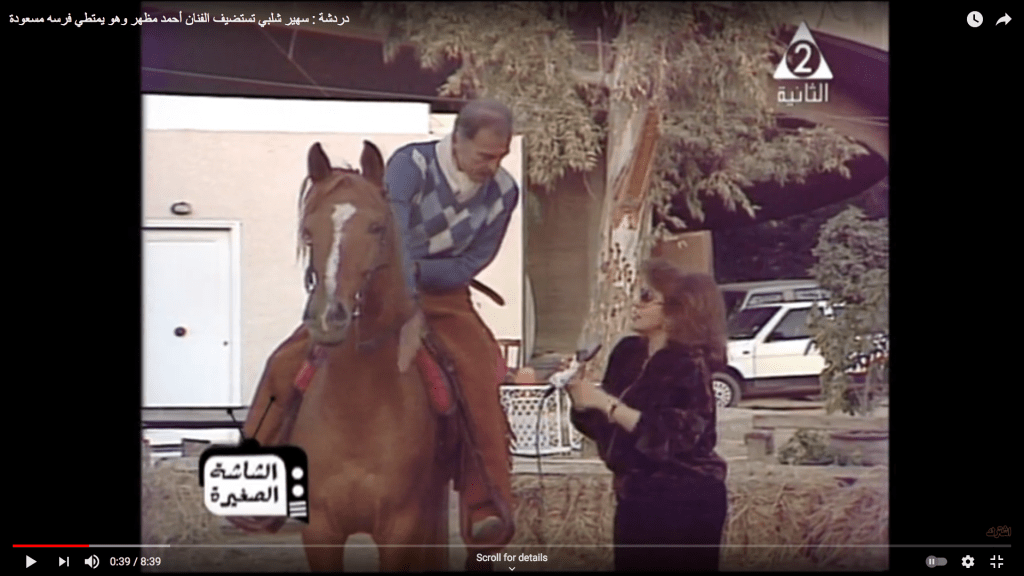
Ahmad Mazhar, the renowned Egyptian actor and former member of the Egyptian Cavalry, was one of Dani’s best friends. He was credited for introducing Dani to Colonel la Farge in the Cadre Noire of Saumur. Colonel La Farge supervised Dani’s jumping training. Dani will discuss him in detail in Part II of the interview.
In Egypt, She was the only female rider to compete on an all-male Egyptian team. She won international jumping competitions and brought back pride and trophies to her country. Her excellent riding skills qualified her to judge a horse based on its movement and not on mere appearance:
“I truly believe that you can get to know the horse best by riding. It reveals the intelligence, character, and wonderful connection that you have with Arabians. This has stayed with me throughout over 50 years of breeding and brought me the joy of having the eighth generation of my own breeding on the farm.”2
Jeep was Dani’s first Arabian horse. She bought him from a riding school in Alexandria for 80 EGP, a price back then considered quite high for a trained Arabian. He was named Jeep because he would not stop at any obstacle, particularly various water obstacles, which Dani described as the main fear of many riders. Dani said that she would ask him to do the impossible, and Jeep would grant all her wishes.
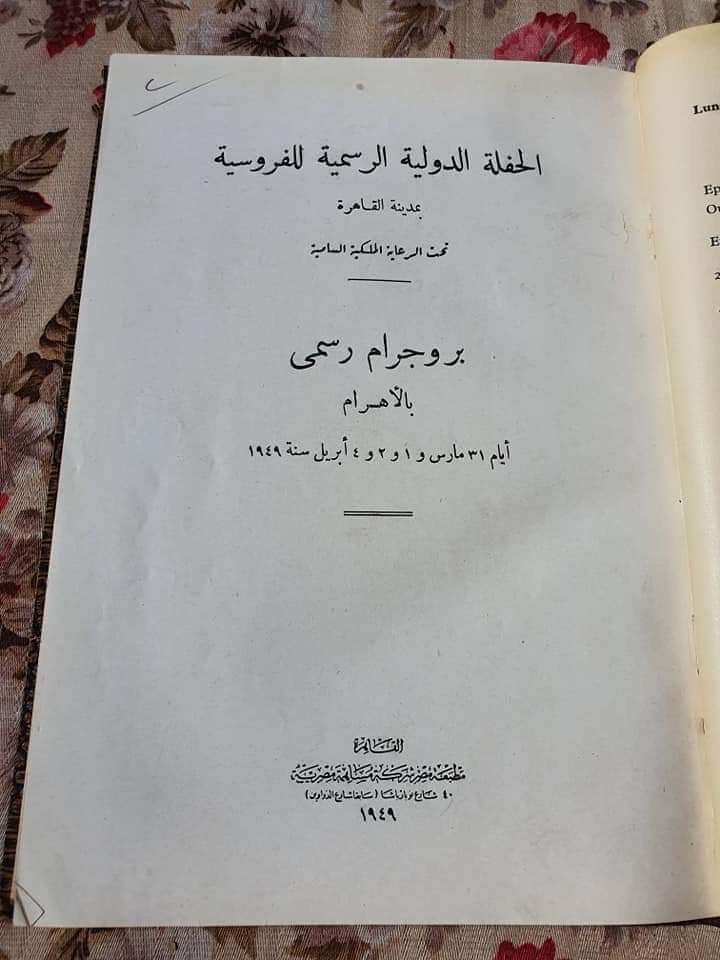
Photo credit: Hisham Amr
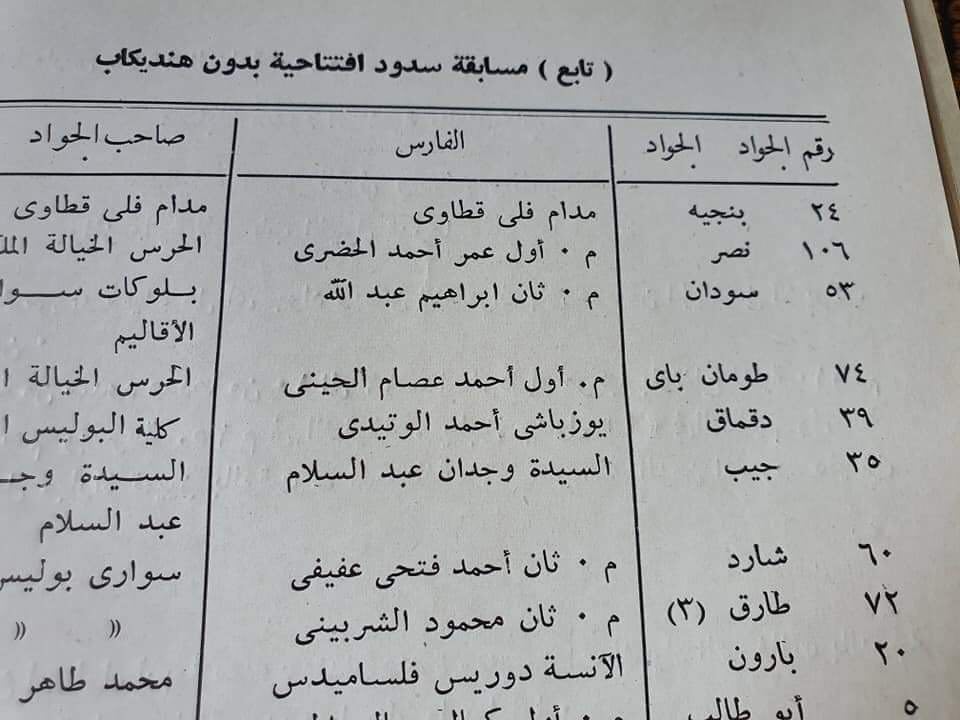
Image credit: Hisham Amr
General Tibor von Pettkó-Szandtner (1886–1961)3 the general director of the Royal Agricultural Society (later known as the Egyptian Agricultural Organisation), was credited to give Dani her education on the Arabian horse. How lucky she was! He taught her to examine the legs of a horse before anything else:
“If you have no legs, you have no horse. That was how he trained me. The horse must stand properly and have wide hooves…”4
Dani always searched for a combination of spirit and look, that is, a correct structure that is translated into a sound and robust movement, and a spirit that exudes intelligence and courage. Her Shams El Asil (SEA) farm influenced foundational programs of major farms such as Rabab stud, and many others. Check the ECAHO database to learn more about Shams El Asil Arabians.
In the autumn of 2008, I paid Dani a visit to learn about the Arabian Horse. Actually, I used to pay Dani many visits and photographed her horses many times: photographs that you will see here on my blog and on my FB page. Dani never ceased teaching beginners this breed. She would talk incessantly all day long about breeding, the heritage and culture of the Arabian horse, and the industrialization and monetization of what she dubbed the Pyramid of the Arabian Peninsula. Dani comes from a generation that is religious about history and heritage, which the reader will feel when she strongly criticizes embryo transfer and artificial insemination.
I was extremely lucky to have met Dani and learned from her, as I have met and learned from other renowned breeders, albeit each had and still has his or her different methodologies in breeding.
To those who are nostalgic for Dani’s voice, enjoy listening to her voice once more. And to those who have not met her before, here is a chance to listen to a legend, a woman who created her footprint in every field she ventured in: a woman who was never afraid to speak her mind.
In Part I of the interview, Dani speaks about the history and culture of the Arabian horse, her breeding philosophy, judging standards, Imperial Imdal and Barbara Griffith, and her thoughts on the ‘ industrialization of the Arabian horse’ and the demands of the show ring.
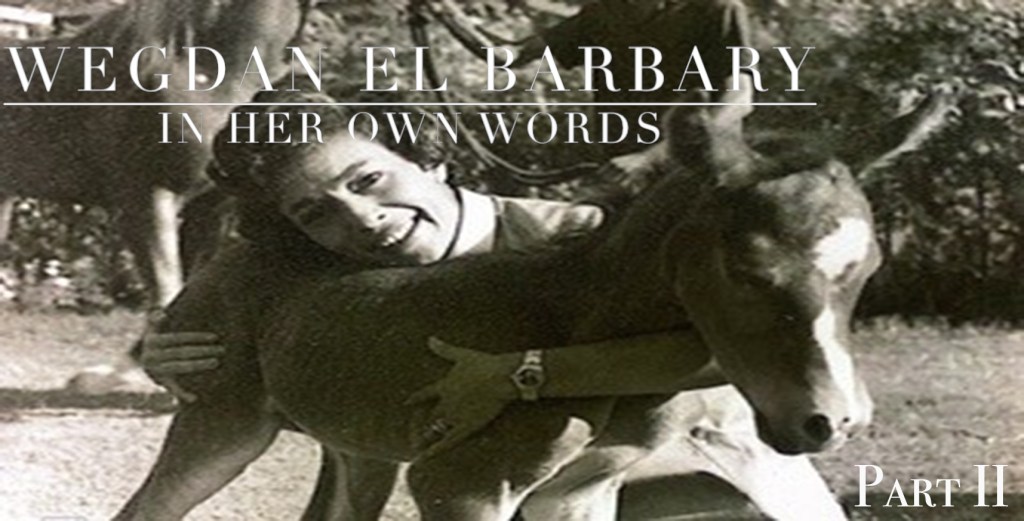
In Part II of the interview, Dani speaks about preserving the Arabian bloodline; breeding in France and the Anglo-Arabian breed as an example; her memories with her trainer Colonel La Farge; the Hispano-Árabe al-Mansour; Khaled bin Laden of Rabab stud and the mare al-Shaymaa; ‘Hybrids’ and refreshing the Arabian bloodstock; Douglas Marshall of Gleannloch Farm; the Breeding Strategy of France: EAO Fawzan; the Russian lines; Psyche Amber Gem (Padron Psyche x AK Zabiya); and EAO Aswan.
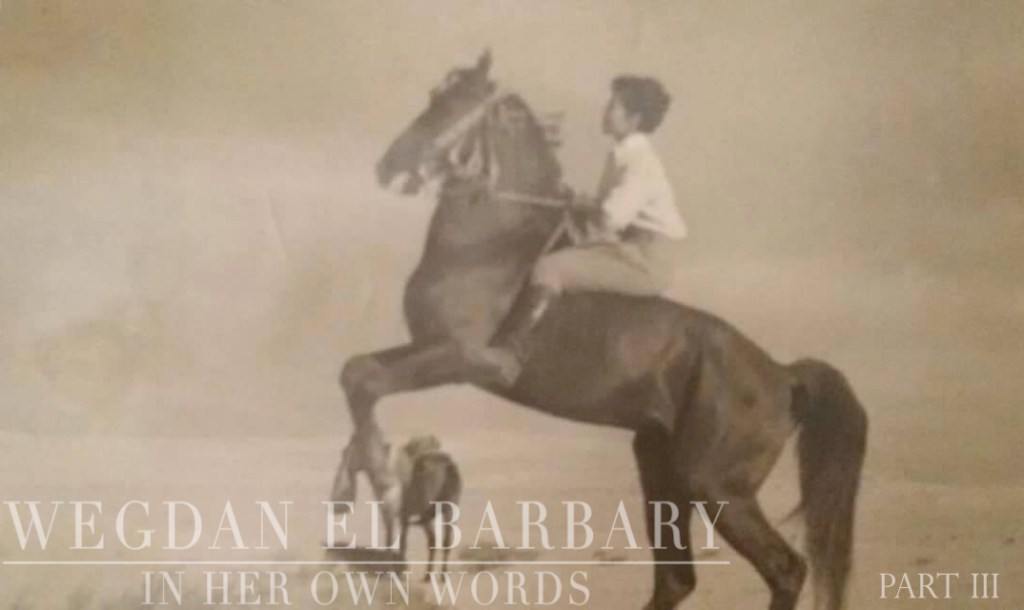
In Part III of the interview, Dani speaks about: artificial insemination in Thoroughbreds versus Arabian horses; the Arabian horse as a cultural heritage; EAO Rashdan; the title ‘Breeder’ then and now; Arabian Horses of Bahrain; Deception in horses; EAO Bilal; EAO Beltagi; and final advice.
Below are links to articles on Dani and those written by her. Lastly, I would like to extend my gratitude to Judi Parks Al-abbasiya, Gudrun Waiditschka, Hesham Amr and Andrea Kaiser for providing me with info and images.
1 Trīkh Tarbiyet al-Khuyūl al-ʿArabiya fī Masr [History of Breeding Arabian Horses of Egypt], ʿAbd al-ʿAlīm ʿAshūb, 1942, p.:32.
3 https://www.wikidata.org/wiki/Q1234194#sitelinks-wikipedia
4 https://issuu.com/arabianhorseworld/docs/dani_el_barbary_06-2012?e=1073044/61846161
Bibliography:
- ‘Reminiscing about the Early Days’, Arabian Horse World, Pat Canfield, June 2012, pp: 142 – 148. https://issuu.com/arabianhorseworld/docs/dani_el_barbary_06-2012?e=1073044/61846161
- Guest Editorial, Arabian Horse World, Dani El Barbary, May 1984, p. 96 https://issuu.com/arabianhorseworld/docs/guest-editorial-danni-el-barbary-05?e=1073044/61846472
- ‘In Memoriam – Wegdan (Dani) El Barbary’, In The Focus, Gudrun Waiditschka, 23/01/2012 https://in-the-focus.com/en/2018/01/in-memoriam-wegdan-dani-el-barbary/
- EGYPT: BREEDERS OF ARABIAN HORSES FIND EXPORTING DIFFICULT, Associated Press, A video Interview with Ms. Wegdan El Barbary 06-07/09/1995, uploaded 09/09/1995 http://www.aparchive.com/metadata/youtube/cdcf5fdd2fd00eb80a2b1c49dcad0659
- Madam Wegdan El Barbary (Dani) and Imperial Imdal +, Dani and Imperial Imdal, 1984 Egyptain Event. Witth Eileen, Barbara & Clarke Vesty ( Imdal’s) Handler 1984, Youtube Channel: Connerrl, https://www.youtube.com/watch?v=qbimd2XevN4
- ‘A Breeding Philosophy, Interview with Wigdan el Barbary’, Horse Times Egypt, Khaled Assem, Summer 2008 Issue 26, https://www.horsetimesegypt.com/pdf/articles/A_Breeding_Philosophy_Interview_with_Wigdan_El_Barbary.pdf
- The Egyptian Alternative Forum, Arabian Horse World, Denise Hearst, p. 17 https://www.yumpu.com/en/document/read/20064681/download-pdf-philippe-paraskevas-the-egyptian-alternative
 The Horse in Word and Picture