
This article was first published in The Arabian Magazine, Collectors’ Edition, 2009.
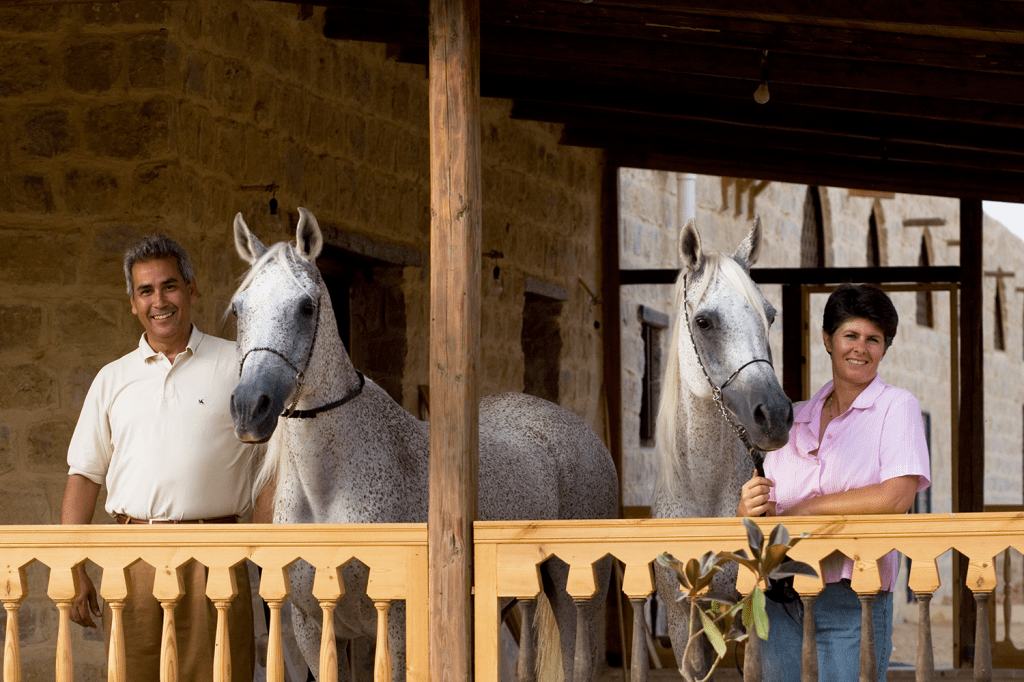
Photo by Rania Elsayed
Inshass Royal stud (RAS) was founded in the mid 1920s with a collection of horses bred by Egyptian breeders followed by desert-bred horses gifted to King Farouk of Egypt joined the stock. When the 1952 military coup took place and the sun of the monarchy had set, RAS had become known as the Egyptian Agricultural Organisation (EAO).
Driven by passion for restoring the Royal heritage and dedication to breeding and preservig the Arabian horse, Yasmine and Ali Shaarawi reveal in this interview the story of tracing the Inshass lines and bringing them home. Moreover, they shed light on their views on breeding Arabian horses.
Rania: Yasmine, as we all know you are the granddaughter of HM King Farouk, the last king to rule Egypt. You come from a family whose contribution to breeding the Arabian horse is incomparable, starting with Mohamed Ali Pasha, Ibrahim Pasha, Abbas Pasha, Prince Kamal el-Din Hussein, Prince Mohamed Ali Tewfik, among other notable breeders from the royal family. Why did you select Inshass lines in particular?
Yasmine: Actually, Ali is credited for this idea to be honest; I didn’t know much about Arabian horses before. But when I started learning, I found the idea wonderful as it is preserving my royal heritage and so it became a passion.
Ali: Yes, I have always had passion for these lines in particular as they combined both strength and structure. I met Yasmine and we found out that we both share passion for these lines, so we decided to continue in this direction, to trace the lines and bring them back.
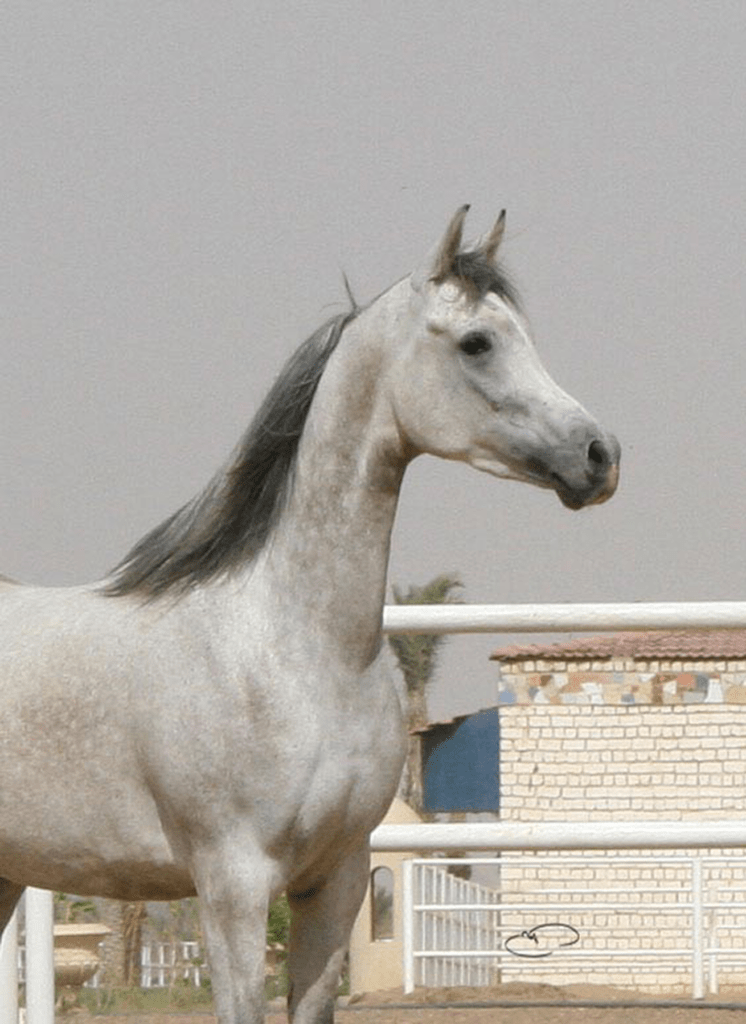
Photo by Yasmine Shaarawi
Rania: Tell me the story! When did you start breeding Arabian horses?
Ali: In 1986, I bought one mare called Wahwaha, a Saklawi mare that traces to Bint Radia’s line. She gave me two fillies the same year, one in January and the other in December. She made it seem that breeding was so easy. I made the mistake of selling the two fillies and after that, I couldn’t get Wahwaha in foal again and she died suddenly.
My second purchase were two mares from the EAO; Anbara and Harissa. Anbara is a daughter of Wasfeya which traces in line to the Inchass Obeyyan El Shahbaa, who also died the same year. The second mare I bought at that time was Harissa, a Hadban Enzahi tracing in line to Bint Samiha, who is still with us and is giving us beautiful babies.
It was heartbreaking for me to lose the two mares in the same year and I almost stopped breeding. Then I thought I had to do something to get over the loss. As people say, if you fall off a horse, you have to get back on the saddle immediately, and so that is what I did. The following EAO auction, I bought Guna, a Saklawi Jidran mare tracing to Moniet el Nefous. She demonstrates the typical characteristics of this line. We also bought three mares, one from the United States and two from Canada. Two trace to the Magida line, which also traces to the El Shahba line of Inchass, and one traces to Maarufa of Prince Mohamed Ali, who was sold to Babson.
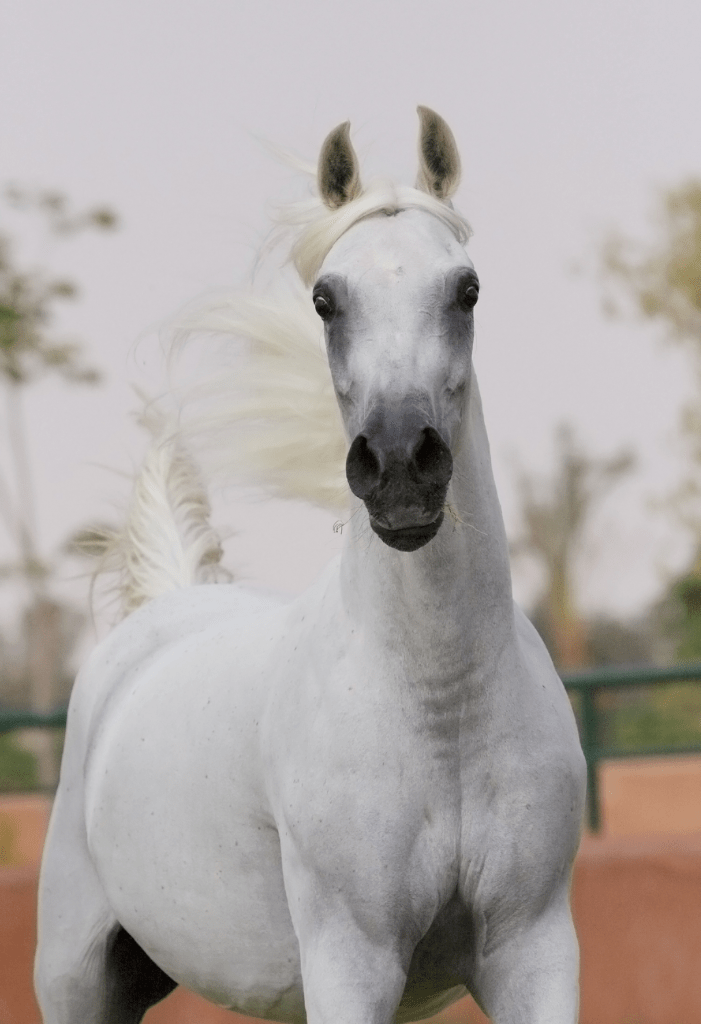
Photo by Rania Elsayed
Rania: What dam lines do you focus on in your breeding programme?
Ali: The Obeyyan line of Magida which traces to El Shahba of Inshass, the Kuhailan Krush line which tracs to Shahd of Inshass, and also the Maaroufa line which Babson bought from Prince Mohamed Ali and which was also bred at Inshass.
Rania: There are some horses that are doubtful in terms of their authenticity such as Nasralla, Besheer Elaskhar, Hanan and Sharkassy among others, and they have created major debate in the breeding society. If their lines will help you approach your goals breeding-wise, would you use them?
Ali: Yes, I would. Those horses were the product of serious study and a dedicated breeding programme based on type and performance on the racetrack. We can never doubt the efforts of those breeders who have carefully inspected and asserted the purity of the blood incorporated in the breeding programmes; the blood which gives us a valuable selection of straight Egyptians which remain famous for their type, speed and endurance. Those horses are pure Arabians and their lines have proven to produce champions.
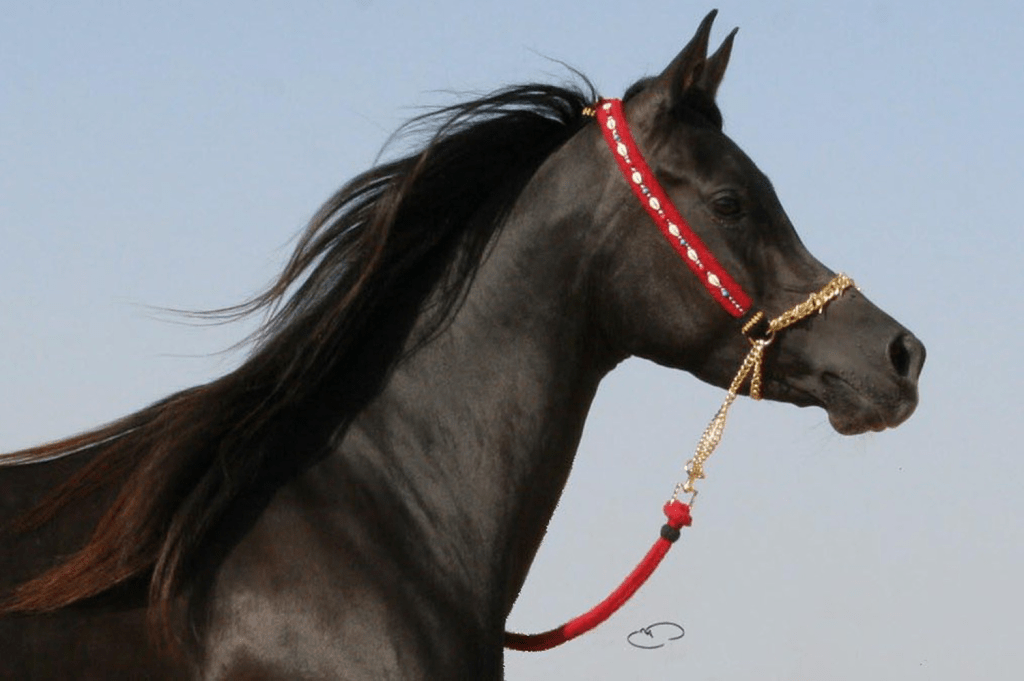
Photo by Yasmine Shaarawi
Rania: As an ECAHO judge, how do you assess the Arabian horse in a show? And how about your assessment of a given mare or a stallion as a breeder?
Ali: There is the technical/physical assessment and the type assessment. I give marks on the correct conformation of the topline, legs, head and neck and so on. And then there is the type. For me the type is what distinguishes the Arabian horse. The Syrians identify it as ‘The Arabian identity’. Type can be applied to character, charisma, attitude or spirit…etc. Basically, type refers to the hidden soul that makes the horse enthusiastic, wanting to move and to prove itself. It is these qualities that breeders of other breeds need when they infuse their horses with the Arabian blood.
I would like to add that a stallion or a mare does not need to be a champion to be a good producer. There are some horses that excel in shows and others in breeding. Of course, there are occasions when one can find exceptional horses that excel in both!
Yasmine: It is common that many think the type is the extreme dish face or generally physical characteristics. But we refer mainly to the character and charisma of the Arabian horse.
Ali: When I breed, I select a stallion to correct the faults or to reinforce the strong points of my mares, yet I never take away the positive features of the mare that they pass on to their offspring. I have mares with a slightly short croup, so I search for a stallion which corrects that flaw, but keeps the type, such as with Gouna. She is a typical Moniet El Nefous type in terms of the composition of the head, neck and the protruding eyes. So it is important for me to find a stallion that will correct her soft back, but without eliminating her beautiful characteristics.

Photo by Rania Elsayed
Rania: In their own point of view, some breeders criticise show horses for lacking correct conformation, especially the forearms and the hindlegs.
Ali: That is a very good point. When I judge the horse, I judge the physical features according to the purpose it is bred for. Judging endurance horses is different from judging show horses and racehorses. We are trying to give points for a perfect model, for characteristics that will better the performance of the horse.
The problem comes when we go to extremes. For instance, an elegant long neck that is in balance with the body is a perfect model and will help the horse achieve balance. But if the neck is too long or too thin, it will throw the horse off balance and affect its function. So we should always be careful not to fall in the trap of extremes.
Rania: Do you think inbreeding can bring out positive results?
Ali: Breeding is an art. And line breeding, cross breeding and inbreeding are all tools that the breeder can use to reach his or her breeding goals. If inbreeding will help me realise my own perspective of the Arabian horse, then why not use it?!

Photo by Yasmine Shaarawi
Rania: Yasmine, you have been involved with horses all your life. Can you pass on some of your expertise to the readers in terms of horsemanship?
Yasmine: I have competed in dressage, jumping, driving and some cross-country. I won a championship in dressage in Egypt’s National Competition in 1995 riding an Arabian stallion called Nageeb. Actually, it was my first real contact with an Arabian horse.
I train our horses myself and all of them are put under saddle when they turn three years old. Arabian horses prove to be exceptional in every case. They are fast learners and comprehend commands from the very first time. Of course, each individual has his own character and you have to understand this to be able to work with it, not against it.
As for riding or working with an Arabian horse, it is a real joy. Arabian horses are so sensitive and intelligent. Now, we have the chance to live with them and we have become one big family together, with our dogs too, and we are enjoying their company very much.
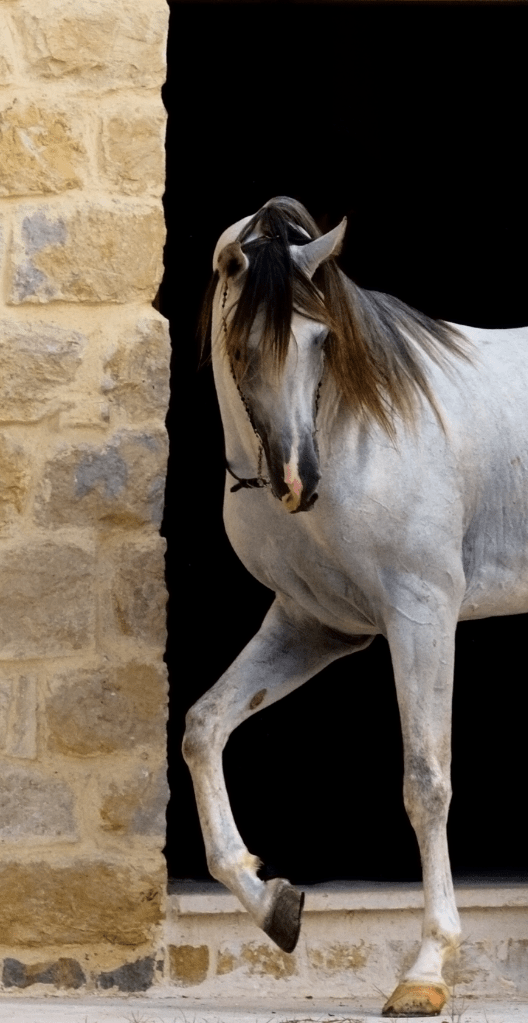
Photo by Rania Elsayed
 The Horse in Word and Picture