This article was first published on StraightEgyptians.com in October 2008.
Two days before the beginning of the holy month of Ramadan, Dr. Nasr Marei and I
visited El Zahraa on a specific photography mission. The purpose was to take photos of the horses that would represent the recent additions to the list of horses that the EAO will use significantly in their future breeding program.
The aura and romance of history prevails. Many who have visited El
Zahraa attest to the fact that the place possesses its own charm which casts its spell once you crossed the gate and set your foot inside the long passage flanked by the lofty palms.
We arrived there at 9 o’clock in the morning and quickly scanned the place and decided upon the best locations. In the meantime, the horses were being prepared for the photo shooting sessions.
Truly, El Zahraa horses are by no means of the so called “show type”. To compare
them with the new look of the show horses of today is definitely an act of unjust towards them. They have set their own category and Dr. Nasr and I were pleased with the quality of the horses that we have seen on that day. Moreover, as photographers, we were delighted to work on such a natural beauty away from customary beautifying procedures that precede the handling in the show ring.
First came the stallions: Rawwah, Baydoun, Daffaf, Tagweed, Monadel and Wassaf. To
start with, we didn’t attempt to look for the beautiful head as defined according to today’s criteria because we knew beforehand we wouldn’t find it here. We looked for the physical composition and the Arabian type in each stallion and how to reflect that type in the photos.
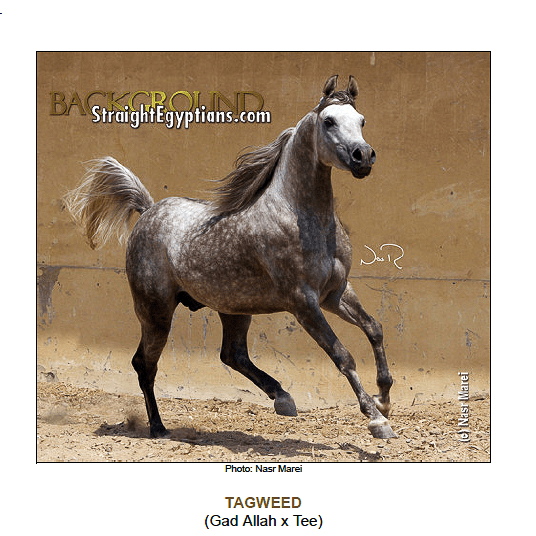
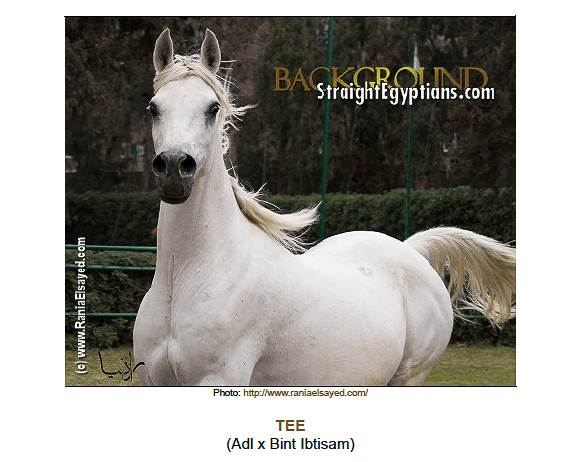
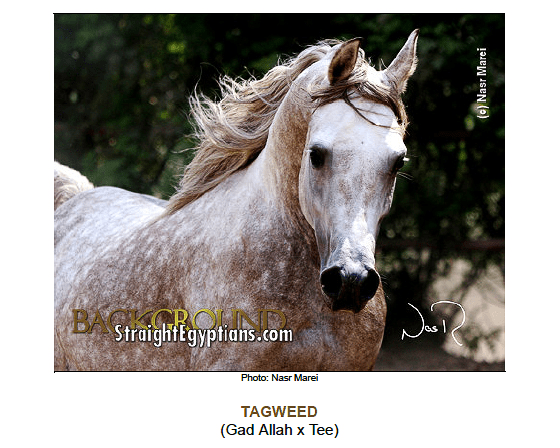
Of the new generation, Tagweed (Gad Allah x Tee) draw our attention with his charisma, balanced, physical structure and type. He is another proof of the successful cross between Gad Allah and Tee, that very same cross that produced Toya El Zahraa – his full sister – currently owned by Al Rayyan farm in Qatar.
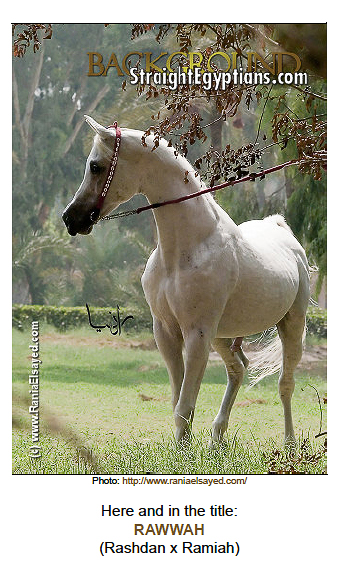
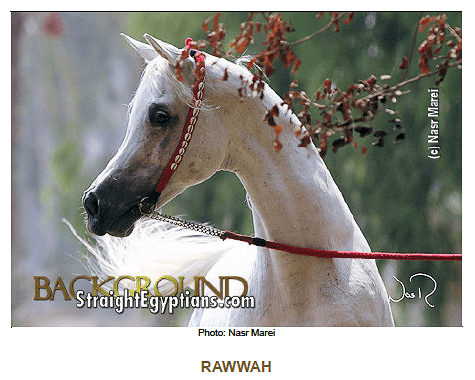
As for Rawwah, he has been successful in the breeding programme already and has acclaimed fame with his classic Arabian type, movement, gentleness and behavior that made the photo shooting go with ease and smoothness.
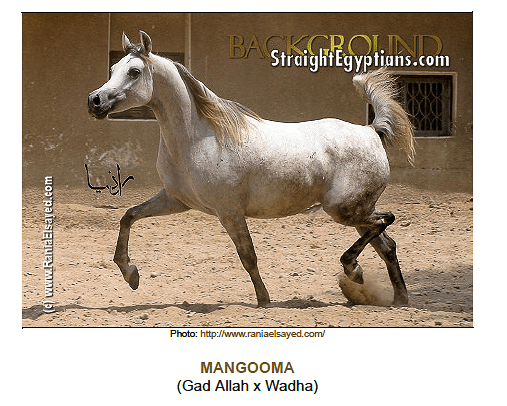
Now it was the turn of the mares and the fillies. Tagweed’s half sister Mangooma (Gad
Allah x Wadha) was first presented. As soon as she was let loose in the paddock, she took our breath away. She announced herself as the unrivaled future queen of El Zahraa. Her movement amazed us. She simulates the typical movement of the ostrich as she hits the ground powerfully with a hind leg and compacts the other while stretching the front legs one after the other covering as much ground as she can. Whenever she stopped we would yell, “Good Girl! Another round, please.”
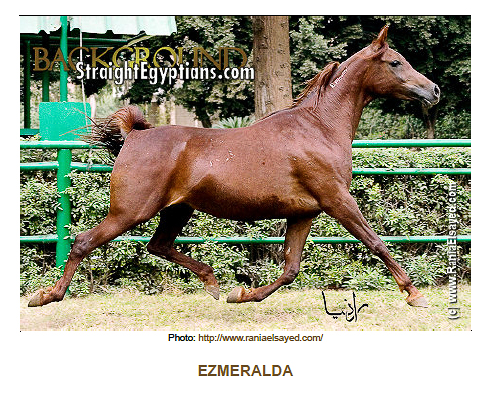
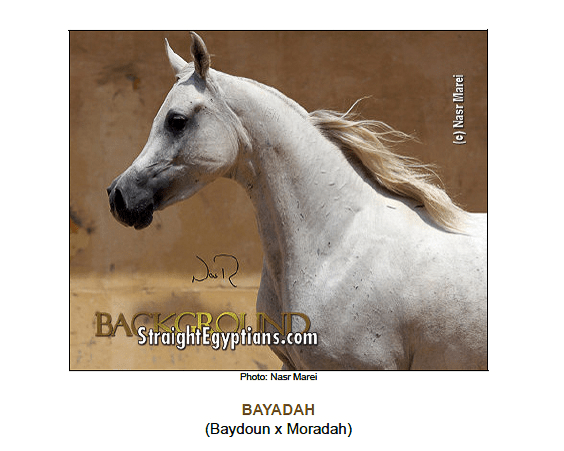
Yet we do not wish to underestimate her stable mates: Fakhera, Ezmeralda, Bawady and Bayada that took their turns individually showing their best in front of the cameras. They seemed to have enjoyed it despite the humidity and hot weather. Moreover, the paddock was spacious enough to give them the liberty needed to manifest what they are made of.
A very important factor for the photographer or breeder to put into consideration is never to judge a horse’s movement inside the show ring only. Visit the horse in his home farm and you will be surprised to see with your own eyes what the show ring does not reveal.
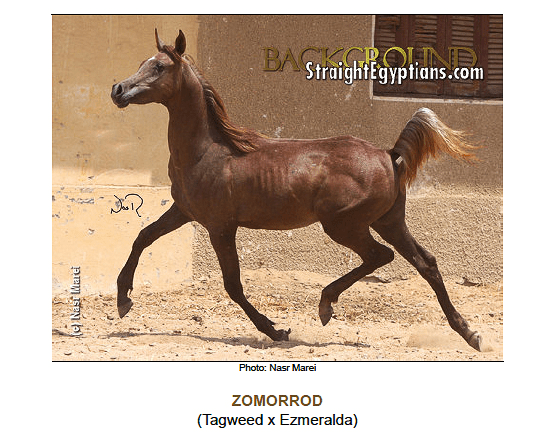
But the treat was a filly which is the first of Tagweed’s progeny in the stud out of
Ezmeralda. Her name is Zomorrod (which means “emerald”) and she reflects every sense of the name. We’ve been told that she has been weaned recently and not subjected to any training whatsoever. We couldn’t take our fingers off the shutter button and tried every angle possible in the paddock, stepped back and forward, and captured her in the shadow and under direct sunlight. The sweat was running from our faces and bodies like streaming water, but we couldn’t care less. As soon as the session was over we couldn’t wait to review Zomorrod’s photos on our cameras to make sure that we have given her the credit she deserves.
That day was not only successful on the photography level but also very promising to
the breed and the quality that the EAO might produce in the future. “El Zahraa is not
beyond salvage as many people claim,” Dr. Nasr commented on our way back. “ It is very true that we have been witnessing a gradual decline in the quality of horses at El Zahraa during the last two decades, mainly because of the lack of an intelligent breeding program that will be able to reproduce horses like the legendary Nazeer, Anter, El Sareei, Morafic, Ibn Halima or mares like Moniet El Nefous, Safinaz, and Kamla. Those are the ones that made the name for the Egyptian Arabians around the world. When they or their get were sold in the fifties and sixties and exported overseas, it was the right decision then. Today many people say that this was a big mistake. My answer to them is that you must export the best you have to build up your reputation and credibility internationally. Secondly, you do have the kind of these horses and their parents. In other words, El Zahraa could have produced another Nazeer, Morafic, Ibn Halima or any other legendary horse. The factory was here and the foundation was established for any good breeder to employ this irreplaceable gene pool.”
But what should be done to reacquire the glamour of El Zahraa? “ It can be done but it
is not easy”, he said after a pause. “The EAO is a government body and making changes by cutting into the red tape, routine and proper funding is difficult. Look to the fate of Marbach, Bábolna and Tersk! EAO endured more than they did though. The common factor here is that they are/were state-owned. Yet on the other hand we have remarkable success stories in cases of Michalow and Janow Podlaski – the ‘Polish Phenomena’. If we want a turn around in El Zahraa, we have to do better in manning the facility and proper training of the personnel, allocate more funds, open the breeding for outside stallions and allow frozen semen importation and usage. They should cut down the number of horses, select only the very best to base the future breeding program on, improve the veterinary care and be courageous enough to admit the mistakes that were committed in the past and that it is time to reverse the trend. Having said that, I must add this is the easier part. The more challenging aspect is to find the breeder who has enough knowledge about breeding better horses, understands pedigrees, can evaluate the quality of horses and has the talent and the touch to properly and effectively utilize the best of the available gene pool and add to it elements and factor to ensure the production of better quality horses. That of course is the most difficult part!”
Again he responded to my question about a major project that is being under study at
present to move El Zahraa to a new location. “At present, the ministries of Agriculture,
Housing and Urban Development and Tourism are studying the establishment of a very ambitious project in which El Zahraa will be integrated,” he answered. “The project will be established outside of Cairo on over 2000 acres and will include a racetrack, show jumping facilities (indoor and outdoor), polo and country Clubs, three-day-eventing course, equine hospital, riding tracks, plots to establish stud farms that will be offered to breeders. ElZahraa will be the heart of the project situated on 300 acres. Three and five-stars hotels and many other entertainment ideas in addition to a heritage and Horse museum are also foreseen. If this project takes off (it is on the drawing board now), El Zahraa will evolve into the 21st century. Hopefully with this move, the restructuring of the management of El Zahraa as a breeding farm also will take place with a giant leap into the future. Now is the time to affect major changes or else, El Zahraa could face the fate of other state-owned farms like in Germany, Hungary and Russia.”