The Horse in Word and Picture would like to welcome another authority on Arabian horse breeding and on Arabian horse prints and books.
Claudia Dijkstra has kindly agreed to write for the blog, and to share her knowledge with our cherished readers and the broader Arabian horse community.
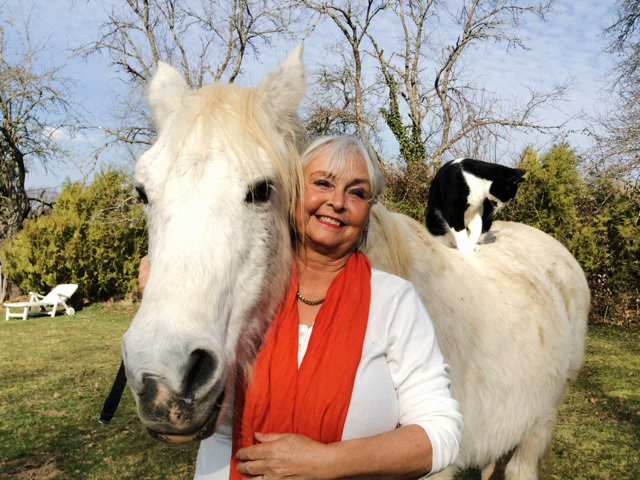
Claudia with her mare Amilette. Amilette is 34 years old and has a lineage that combines Polish, Russian, and Spanish bloodlines. Her sire is Gil, by Probat. While her dam, Astrea, is by Nagasaki and out of Kama, who is by Salon (Negatiw). Amilette will turn 35 in March.
The following is the short biography that Claudia wrote for our readers in order to get to know her better:
My Life with Arabian Horses
The first picture I saw of an Arabian horse was in a magazine when I was still in primary school. It featured the famous horse Skowronek. Little did I know that decades later, I would have his descendants in my fields. A few years later, I bought my first book on Arabian horses, ‘The Arabian Horse in Europe’ by Erika Schiele and my first three lithographs by Carle Vernet for which I borrowed money to buy since I was only 12 years old. I was lucky to have a father who was a print collector and took me along with him. At the same age, I began studying pedigrees and attended my first Arabian horse show.
My first show was very large with great horses from many different bloodlines, including Crabbet, Russian, Polish, Marbach, and Spanish, mostly imports. Among them were Padron’s grandfather Bright Wings, the Nizzam son Nisry, the Spanish Chavali, dam of Makor, and Russian imports by Arax and Pomeranets. After that show, I was hooked. However, before taking another step to pursue that passion, I had to finish school—five more years to go. Immediately after school, I left for England and began working at Margaret Lady Harmsworth Blunt’s Hunum Arabian Stud in Sussex. I wanted to work with Arabian horses and was eager to pass my stud manager’s exams.
Lady Blunt primarily had English bloodlines: the two Blue Domino sons Barbe Bleu and Salvador. But she was one of the first breeders to use other bloodlines such as the Polish Grojec by Comet, Makor by Galerio which was imported from Spain, and the Egyptian The Shah. Additionally, she purchased the Russian Stopa, a Pomeranets-daughter, all which was very unusual at the time. My teacher, Lady Blunt’s stud manager, had lived and worked at Newbuildings Place. It wasn’t only the estate where Wilfrid Scawen Blunt had lived and died, but also it was the home of Lady Anne Lytton, Lady Wentworth’s daughter. I had the fantastic opportunity to visit Newbuildings Place on several occasions. During the show season, we traveled all over England, and I was very lucky, again, to see many Arabian horses and visit several private studs.
After a couple of years, I returned to the Netherlands with my Stud Manager’s diploma in hand. In accordance with my parents’ wishes, I had to stop working with horses and attend college. Even while studying, I frequently helped at a small stud farm with Arabian horses and began attending every single show. The quality was high, and there was a great variety of bloodlines and types at that time. Most studs—including state studs—and countries had their own distinct types, qualities, and different methods of selecting horses for breeding, such as Poland and the Russian Tersk Stud. Both beauty and performance were important. Therefore, it was often easy to recognize the origins of each horse presented. It was huge fun! Annual highlights in the seventies, eighties, and nineties included the Dutch Stallion Premium Show, the British Arab Horse Society Show, the Salon du Cheval in Paris, and Aachen in Germany. For several decades, I never missed any of these shows.
In 1980, I left for Germany to work at Ismer Stud for nearly two years, where I performed stud work and rode a couple of racehorses every day. In 1982, I returned to Holland and lived and worked in Amsterdam. I also took a part-time job at a small stud just outside the city. The owner primarily bred Crabbet and Russian-bred horses. The neighbour was the famous Kossack Stud, home to excellent Russian stalllions, such as Aswan sons Mag, Antey and Patron, and Nabeg sons Nadejni and Peleng, including so many others who had an immense impact worldwide. I bought the first daughter of Patron’s son Tombent la Neiges, which became my very first horse. When Arab racing started in Western Europe, I went to the racecourse near The Hague whenever possible. Now settled in Amsterdam, I also had time to travel and, over the years, visited many studs and shows in Denmark, Sweden, France, Belgium, Germany, Spain, Austria, Italy, Poland, Jordan, Oman, and Egypt.
Over the years, I completed several judging courses organized by different studbooks, which allowed me to learn how to judge various breeds. For Arabian horses, I received lessons from Dr. Houtappel, R. Kydd. Daan Modderman, and many others. However, I never had the desire to become a judge myself. When ECAHO was first established, I was invited to join the Disciplinary Committee. I was Disciplinary Committee member for several years and attended shows in different countries. Unfortunately, I was unable to prevent the abuse and help the horses—the very reason I had joined.
At the same time, I began working for the Dutch Arabian Horse Studbook as an Inspector for Export and Import horses. Approximately 300 horses were exported each year, and I was responsible for inspecting every single horse before they could leave the country. I performed this work for 15 years. Concurrently, I worked as a freelance reporter covering topics related to Arabian horses and art.
I regularly collaborated with photographer Rik van Lent Sr., who asked me to write articles to accompany his pictures. In the early 1990s, I missed working with studs and wanted to go abroad again. This time, I planned shorter stays, mostly during foaling seasons, to assist new studs in getting started. First, I returned to Germany when an old colleague invited me to help her at Nagel’s Katharinenhof. The following foaling season, I was hired by Shamilah Arabians in France, and the third season I worked for Madame de Jacobert in Tuscany, Italy. This experience provided a great opportunity to see and handle some very high-class Arabian horses of different origins while living in different countries for a time.
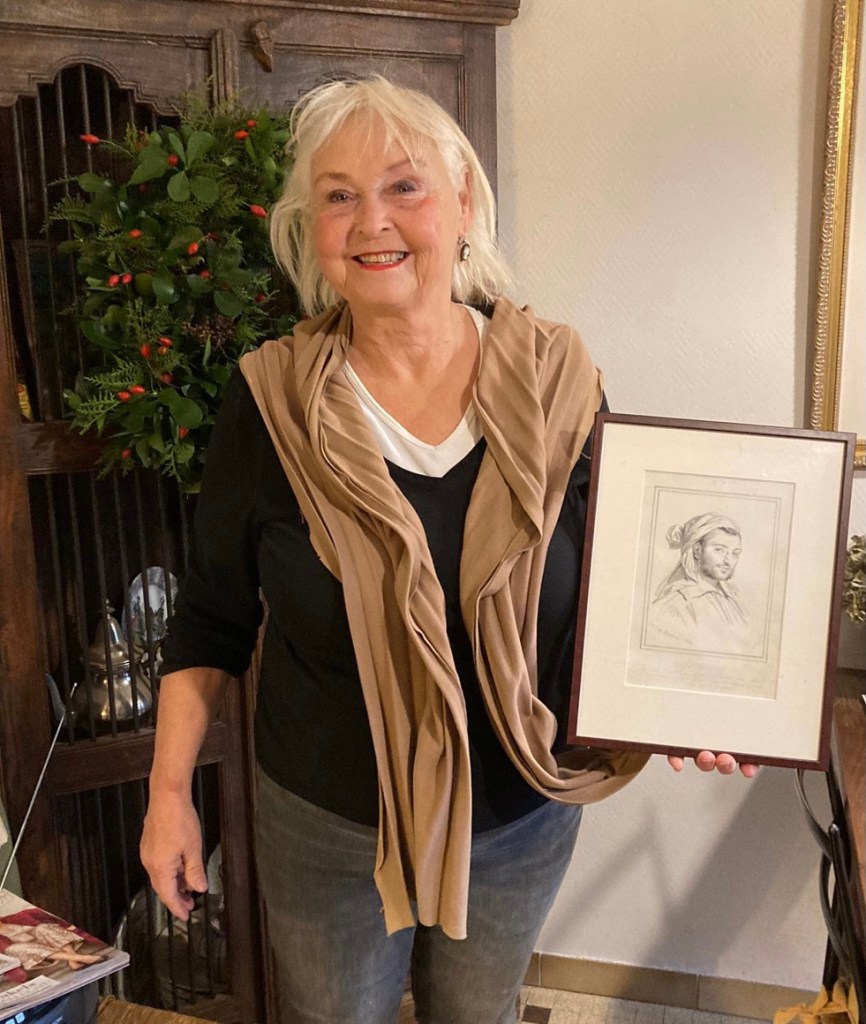
When I returned to Amsterdam once more, I had my own horses stabled close to the city. The owner was a veterinarian who specialized in horses, so I learned a lot from him too. His father had even owned one of the first registered Arabian horses in Holland, As-Sa’idah, a Kehailah Foersah born in 1933, which was a gift from the breeder, His Majesty King Ibn Saud of Central Arabia. In the meantime, I never stopped searching for original early 19th-century Arabian horse prints and books, so the collection grew.
In 2000, I emigrated to France to start my own stable. Many breeders sent me their Arabian horses, often including broodmares that came to foal. I also cared for the mares covered by racehorses and their foals so that the latter could obtain French papers. The foals would then stay at my place at least three years to grow up, before they were sent to the racecourse to start their career. Another reason I was fully booked in a pretty short time was that I typically cared for around 25 to 30 horses at the farm while also running a bed and breakfast (B&B).
Some years ago, I lost my land and moved to a smaller place with fewer horses. Now, I only have my own two home-bred mares to care for; they are 23 and 34 years old. My art and book collection is still there and continues to grow, although it has become increasingly difficult to find the ‘real original thing‘. In the near future, I plan to create a catalog of all known Arabian horse books—approximately 800 to 900 volumes to register, which is a considerable amount of work.
I sincerely hope we can preserve these treasures for future generations.
 The Horse in Word and Picture