This article was published in Al-Tibb, Healing Traditions in Islamic Medical Manuscripts, a catalogue published by ISLAMIC ARTS MUSEUM MALAYSIA.
In the 12th and 13th centuries AD, Egypt had its unforgettable share of political and military upheavals with the Crusades and the Mongol hordes. The horse played a remarkable role in these conflicts, whether in the battlefield or in carrying on its back emissaries and messengers across countries during times of peace as well as those of war. Centuries earlier, the horse bore the message of Islam on its back throughout the Arabian Peninsula, and with that message the Islamic empire emerged and expanded.
The example I shall discuss here is drawn from Egypt, particularly the Mamluk Sultan al-Nasir, Nasir al-Din Muhammad Ibn Qalawun (693/1294, 698/1299 to 708/1309-10 and 709/1310 to 741/1341) and al-Baytar al-Nasiri, the Sultan’s grand master and chief veterinary surgeon of the royal stables , who acquired his epithet after that of the Sultan.
He penned the equine veterinary treatise Kashif hamm al-wayl fi maʿrifat amrad al-khayl, also titled Kamil al-sinaʿatayn al-baytara wa ’l-zartafa.
Islamic equine veterinary science, although developed from earlier Greek and other late antique medical manuals, drew its significance and therefore the magnitude of the works published, from the Qurʾan. Since its revelation until today, Muslims recite verses not only praising the horse but also associating it with jihad. Surat al-‘Adiyat : [100:1]: By the snorting courses, [100:2] Striking sparks of fire [100:3] And scouring to the raid at dawn, [100:4] Then, therewith, with their trail of dust, [100:5] Cleaving, as one, the centre (of the foe).” Surat al-Anfal: “[8:60] And make ready against them all you can of power including tethered horses to threaten the enemy of Allah and your enemy.” These verses coupled with Prophetic narrations or hadith attributed to the Prophet Muhammad peace be upon him, landed the horse a prestigious and semi-holy status in Islam since it had become associated with the duty of jihad and the spread of the message of Islam.
The preservation of the life of the horse and the study of its characteristics and diseases could no longer be based on its function as a war machine, as it is praised by Allah in His holy book. The horse is also praised by Prophet Muhammad when he said: “Goodness will remain in the forelock of horses until the day of Judgement”, in addition to other hadiths. Taking care of the horse became a duty no less holy than that of jihad.
In his manual on equine veterinary science and horse breeding, Abu Bakr Ibn Badr al-Din al-Baytar al-Nasiri (d. 741/1340), starts his treatise by praising the horse, its virtue and the virtue of jihad and the mujahidun. In this respect, Abu Bakr follows the practice of earlier veterinarians from whom he copied, such as Ibn Akhi Hizam (occasionally written Ibn Abi Khazzam) of the 3rd/9thcentury, who wrote a manual on equine subjects titled Kamil al-Sinaʿatayn fī al-Baytara wa al-Zartaqa. Abu Bakr dedicates a chapter to both the desired and the denounced physical characteristics of stallions and mares, in addition to methods of recognising the qualities of a purebred and resilient horse and the selection of horses for the breeding programme. He also discusses which horses to exclude from breeding, and the qualities that distinguish a mare and those that distinguish a stallion. Then Abu Bakr devotes the chapter that follows entirely to the physical imperfections of each part of the body of the horse, from head to tail followed by a chapter addressing the maladies of the horse.
Abu Bakr himself acknowledges earlier works on equine veterinary science from which he copied the previous observations, practices and diagnoses of his predecessors, be they transmitted verbally or in writing. In addition, he documented in his manual practices which he himself had observed from other veterinarians and skilled practitioners in the field. He tried some of the practices and adopted them; as for other practices that he did not examine, he mentioned the sources that he had copied.
Abu Bakr is credited with amalgamating whatever preceded him in equine veterinary science. This can be traced to as early as the Corpus Hippiatricorum Graecorum, written by the fourth century Greek veterinary surgeon Theomnestus.
The treatise of Abu Bakr demands our attention not only for the magnitude of that work, but also for the impact of the patronage of Sultan al-Nasir Muhammad. The Mamluk Sultan instructed his chief surgeon to write the treatise because the Sultan himself invested his time and money to study, purchase and breed the best pureblood horses his treasury could acquire.
Al-Nasir Muhammad is celebrated in medieval Arabic texts for his unrivalled passion for breeding pureblood horses. He owned approximately 3,000 horses in his pastures, 4,300 as al-Makrizi reports in his al-Mawaʿiz wa ’l-Iʿtibar fī Dhikr al-Khitat wa ’l-Athar and 4,800 horses in his royal stables. The horses comprised purebred mares, stallions, colts and fillies in addition to mixed breeds. Al-Nasir supervised the breeding programme in person. He selected which stallion should cover which mare in order to produce healthy offspring, free of any imperfections. Remarkably, Al-Nasir remembered the name of each and every mare, stallion, colt and filly in his stables. In the spring season, al-Nasir would display the offspring of his breeding programme and would boast by calling the colts and fillies by name, along with the names of their dams and sires, their dates of birth and their strains. I have not come across previous sultans who kept record-books or studbooks of the horses. Al-Nasir kept records of his horses in all his stables. These records contained the name of the horse, the name of its dam, its sire, its markings, its strain, the date of its birth, and if purchased, then with how many dirhams. If a horse in his stables became ill, al-Nasir would be informed and would personally supervise the treatment of the horse.
Al-Nasir was keen to instil a love of horses among the members of his entourage, his loyal and accomplished soldiers and bodyguards. Twice a year, once in the spring and the other during the season of the polo games played in al-Maydan al-Kabir or the Great Hippodrome, al-Nasir distributed desert horses among dignitaries and heads of state, and also among his favourite amirs and members of his personal guard, grooms and managers of his royal stables. The high-ranking amirs received a yearly quota of horses that was provided from his royal stables. Umaraʾ al-Uluf, or the Amirs of Thousands, received horses with harnesses, saddles and gilt belts and cloth woven in golden and silver embroidery. Umaraʾ al-Arbaʿun or al-Tablakhana, i.e the Amirs of Forty, received horses without saddles or kanabish and the harness would have subtle silver embroidery. The share of each would reach approximately 100 mares. The Amirs of Tens would receive horses without saddlery but still a manifestation of al-Nasir’s generosity and benevolence. With such numbers of horses owned by al-Nasir himself, in addition to those distributed among members of his entourage and court, one could imagine how important the treatise of Abu Bakr was to the Sultan as well as to his subjects.
Al-Nasir Muhammad represents a remarkable role model of how a patron and a connoisseur of science and horsemanship ought to be. Without patrons who invest not only money but time and passion in pursuing and nurturing knowledge, works with the magnitude of the treatise of Abu Bakr would not have been born into this world. Although Abu Bakr is credited with amalgamating previous works and adding his own to his treatise, the Mamluk Sultan in his striving for excellence in breeding and administering his horses, should be given equal credit for the production of the treatise of Abu Bakr.
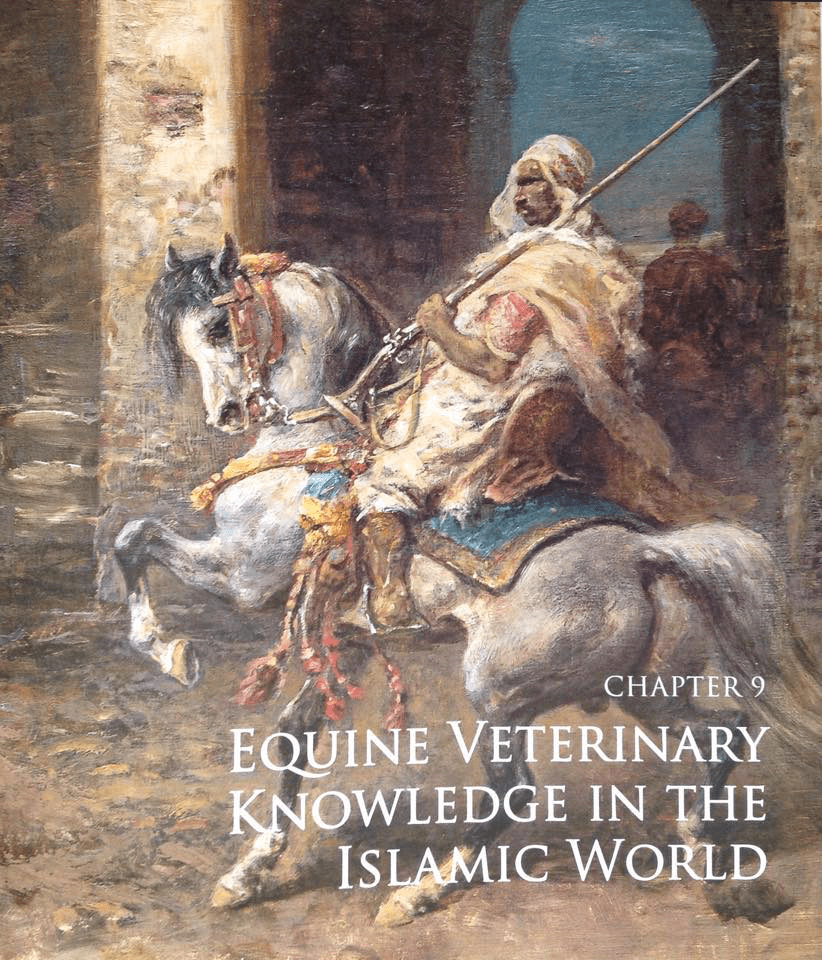
 The Horse in Word and Picture